
Preventing Constipation in Babies and Young Children
14th May 2026 · Written by: Varsha Nagaraj
Preventing Constipation in Babies and Young Children
Constipation is very common in babies and young children, about 1 in 3 children develop constipation and it can become chronic for some children, particularly for those with special needs. However, it can be prevented with simple, healthy habits. Spotting the signs early and getting support quickly can help stop constipation from becoming a long-term problem.
As parents, it can sometimes be difficult to know what is 'normal' when it comes to your child's stools. Changes in feeding, starting solids, illness which can cause them to become dehydrated and toilet training can all affect bowel habits.
What Does Normal Baby Stools Look Like?
During the early days and week, babies open their bowels several times a day and this is normal. From 6 weeks of age, many babies settle into a pattern, usually going once a day or every other day.
Breastfed babies usually have soft, mustard yellow coloured stools that is seedy in appearance. It is rare for a breastfed baby to become constipated as breastmilk contains prebiotics which helps to absorb water in the gut forming a jelly which prevents constipation from occurring.
Formula-fed babies often have firmer, darker, and stronger-smelling stools. Formula fed babies are also more prone to developing constipation compared to breastfed babies. Some formula milks can make stools appear green, and this is usually normal.
In general, if a baby is feeding well and is hydrated, baby stools should stay soft and easy to pass.
If your baby is under 8 weeks old and has not opened their bowels for a few days, speak to your health visitor or GP for advice.
Cow's Milk Protein Allergy
Constipation can be a symptom of cow's milk protein allergy, but this usually happens with other symptoms. If your child has constipation alongside other allergy symptoms, speak to your Health Visitor or GP. Once the milk allergy is identified and treated, the symptoms usually improve.
Reflux Treatments
Some of the specialist reflux formulas and medications used to treat reflux can also cause constipation as a side effect, so it is important to keep an eye on your baby's bowel habits.
Introducing Solids
When babies start solid foods at around 6 months, it is normal for their stools to change.
You may notice firmer and darker stools and small pieces of undigested food
This is all part of the baby immature digestive system learning to handle new foods.
Constipation can sometimes happen during weaning because stools naturally become firmer.
Tips to Prevent Constipation:
- Start with small amounts of food once a day and gradually increase this week by week.
- Increase the variety of foods and texture gradually.
- Continue to offer breast or formula milk as their main source of nutrition alongside solids.
- Offering water in free flow cup or beaker alongside meals.
- Full fat cow's milk can be added to foods and while cooking.
- Some food groups such as fruit and vegetables naturally contain water and fibre and should be introduced early on.
Changing Baby Milk
Sometimes when a feeding routine changes, such as from breast milk to formula, or switching formulas, or from formula to cow's milk this can affect a baby's bowel habits.
Formula milk and especially cow's milk is harder to digest than breast milk, so some babies may develop constipation when changing milks.
Keep an eye on whether your baby's stools remain soft and regular. If you are concerned, speak to your GP or health visitor.
ERIC- the Children's Bowel and Bladder Charity have developed a helpful Poo Checker for parents to use, showing the different types of stools and what it means. This is based on the original Bristol Stool Chart.
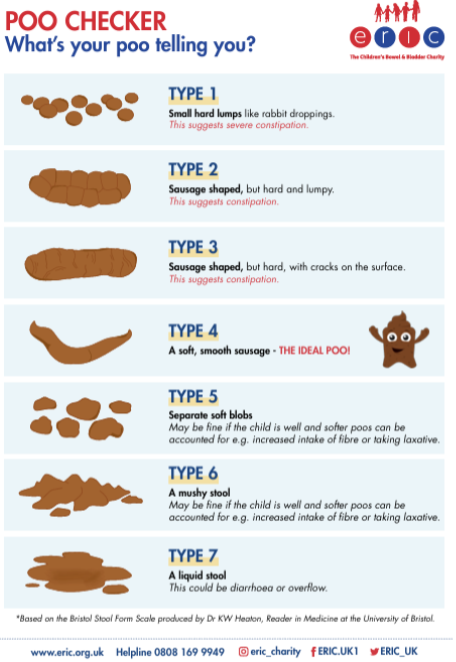
If constipation is suspected or if bowel habits become irregular, it can be helpful to maintain a bowel and symptom diary to keep a track of your child's bowel habits.
Fibre and Fluids: Keeping Bowels Healthy
Fibre helps stools stay soft and bulky, making them easier to pass.
It is encouraged for children to eat a variety of fibre-rich foods from the four main food groups of the national Eatwell Guide, including:
- Fruit and vegetables
- Wholegrains
- Beans and lentils
- Nuts and seeds (where age-appropriate and safe)
Good bowel habits start with a healthy family diet.
The Importance of Fluids
Drinking enough fluids helps prevent hard stools.
Daily Fluid Recommendations for Children
| Age | Fluid intake from drinks (ml/day) |
|---|---|
| Infants 7-12 months | 640-800 ml |
| Children 1-2 years | 880-960 ml |
| Children 2-3 years | 1040 ml |
| Children 4-8 years | 1280 ml |
For young children:
- Encourage regular drinks throughout the day
- Water should be the main drink
- Milk still contributes to fluid intake
Simple Things You Can Do at Home
There are lots of gentle ways to help prevent constipation in babies and young children:
- Give your child plenty of healthy fluids
- Encourage active play and movement
- Try gentle tummy massage
- Use bicycle leg movements for babies
- Bath time will help relax tummy muscles
- Encourage regular toilet or potty sitting
- Never rush toilet time
- Encourage children to go to the toilet when they feel the urge
Make Toilet Time Positive
Children are more likely to develop healthy bowel habits if toilet time feels relaxed and pressure-free.
You can make it fun by:
- Having a special stool
- Playing their favourite music
- Singing songs
- Blowing bubbles
- Using rewards or stickers
When Should You Seek Help?
Speak to your GP or health visitor if:
- Your child seems uncomfortable or in pain
- Stools are hard, large, or difficult to pass
- There is blood in the stools
- Not opening their bowels for a few days
- Your child avoids going to the toilet
- Your baby has constipation like symptoms along with reflux or vomiting, skin issues, breathing difficulties, or poor feeding
Final Thoughts
Constipation can be common, especially during times of change such as introduction to solid foods, toilet training and starting nursery or school.
Early support, healthy eating habits, drinking enough fluids, and positive toilet routines can make a big difference.
If you are worried about your child's bowel habits, trust your instincts and ask for support early.
Thank you for reading – If you would like to discuss further, please get in touch!